The Problem With Remembering It in the Truck
You pull up to a stop, notice the multiport valve is weeping, make a mental note, finish the visit in seventeen minutes, drive eleven minutes to the next pool, and by the time you get home at 5:45 that valve is gone. Not forgotten exactly, but buried under eight other things you noticed that day. You know the feeling. You have probably lost thousands in deferred repair work this way, not because you are disorganized, but because you are running a route, not running a repair shop.
The pool repair upsell route most operators talk about is not some elaborate sales funnel. It is just a reliable system for capturing what you already see every week and turning it into a proposal before the customer calls somebody else.
What You Are Actually Looking At on Every Stop
A standard weekly stop gives you a real inspection window. You are already reading the water, checking pressure, looking at the equipment pad. The problem is that nothing you notice gets recorded unless something is bad enough that you deal with it on the spot.
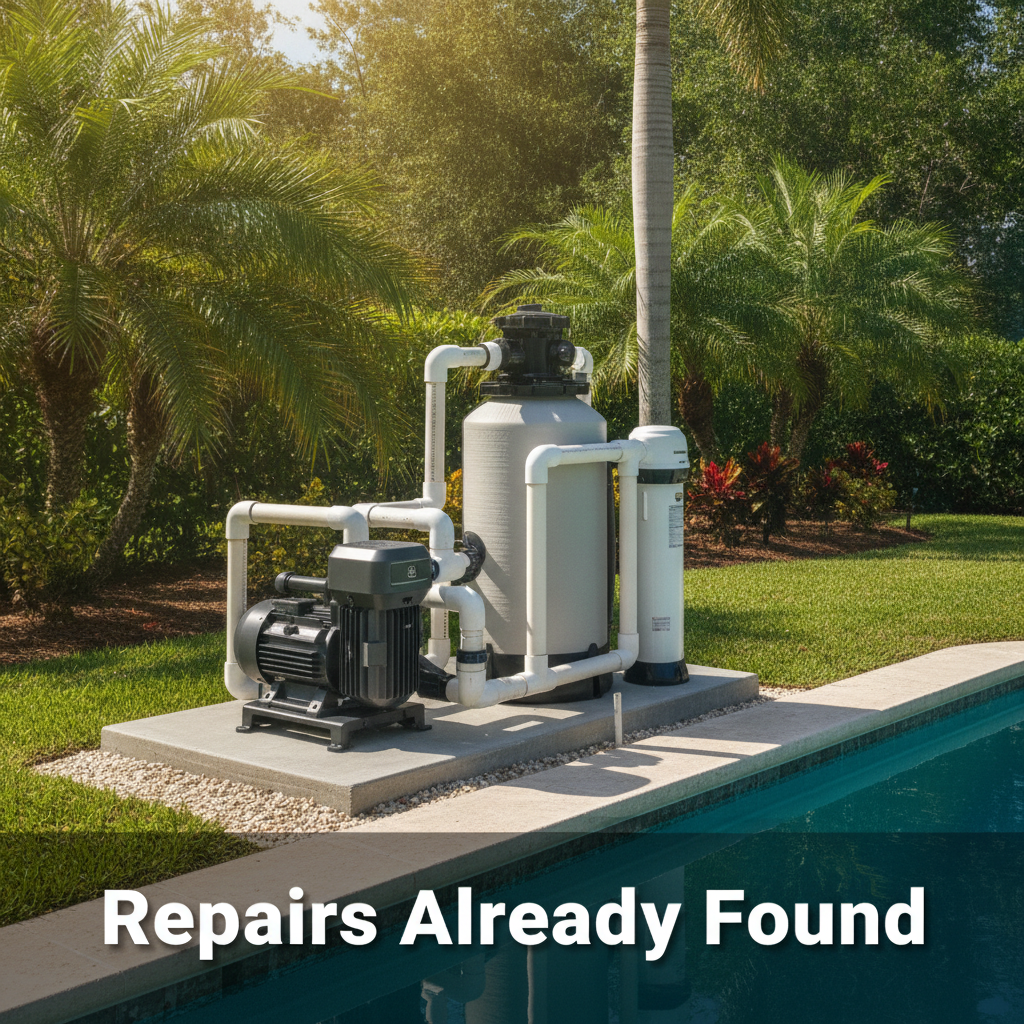
Think about what you walk past in a month across a 40-pool route. Aging unions showing stress cracks. Salt cells that are two seasons past their useful life. Pump lid o-rings that are flat and chalky. Variable speed drives running the old fixed-speed program the previous guy set in 2019. Jandy valves that are stiff enough to strip if someone forces them. None of this is invisible. You see it. You just have no system for capturing it.
That gap between seeing and following up is where repair revenue evaporates.
Build a Two-Category Habit at Every Stop
Keep it simple or you will not do it. At each stop, mentally sort what you see into two buckets.
- Fix now. Something that is affecting water quality, creating a safety issue, or about to fail in a way that damages other equipment. You handle it or you flag it for an emergency call-back.
- Quote this week. Everything else you noticed that the customer does not know is a problem yet. The weeping valve. The corroded bonding lug. The DE filter that is due for a full teardown.
The second bucket is your repair pipeline. The only question is whether you capture it or lose it.
Log It at the Stop, Not at Home
This is the actual discipline. You have to record the observation before you leave the driveway. Not at lunch. Not when you do your end-of-day admin. At the stop, while the equipment is in front of you.
A voice memo works. A note in your phone works. A paper ticket works if you are disciplined enough to process it later. What does not work is relying on memory across a full day of stops.
In getLucci, you can attach a note directly to the service stop with a status that marks it as a pending repair quote. That keeps it tied to the customer record and shows up in a separate queue so nothing sits idle. But honestly, whatever system you will actually use consistently is the right system. The method matters less than the habit.
A Worked Example of What This Is Worth
Say you run 80 pools at an average of $110 a month. That is $8,800 in recurring service revenue. Solid base. Now think about repairs.
If you do a genuine equipment check at every stop and log what you see, a conservative estimate is that one in eight pools has something worth quoting in any given month. That is ten pools. If half of those customers say yes to a repair quote averaging $280, you have added $1,400 that month. That is a 16 percent lift on revenue with no new customers, no marketing, no price increase. Just capturing what you already see.
Pump motor replacements, filter cleans, salt cell replacements, automation upgrades on older systems. None of these are complicated sales conversations. The customer trusts you because you are already there every week. The barrier is almost always that nobody told them it needed doing.
How to Follow Up Without Being Pushy
Most pool customers are not waiting to be sold something. They are waiting to be told something needs attention by someone they trust. There is a difference.
A short text or email that says something like: "Noticed your pump lid o-ring is going flat - left it for now but worth replacing before it starts leaking. Happy to grab one on my next visit, around $45 parts and labor. Just let me know." That is not a sales pitch. That is a service note. Most customers say yes to that without thinking twice.
The follow-up needs to happen within 24 to 48 hours of the stop while the visit is still fresh in their mind. A week later you are starting from scratch. Two weeks later you have probably lost it entirely.
Track Conversion So You Know What Is Working
Over time, you want to know which types of repairs you quote most often, which customers tend to approve work, and how long it takes from observation to closed job. Not because you need a dashboard. Because patterns tell you where to focus.
If you quote heater work and it never converts, maybe your pricing is off or your customers are renting. If salt cell replacements close at 80 percent, you know to be thorough about flagging every cell that is underperforming. Simple stuff, but you only see it if you are keeping records.
The Mindset Shift That Makes This Stick
Running a route efficiently and running it as a repair pipeline are not competing priorities. Every stop is already a paid inspection. You are there. The equipment is running. You can see things the homeowner cannot. Capturing that and converting it into quoted work is not upselling in the uncomfortable sense. It is doing the full job.
The operators who make good money on repairs are not the ones with the best sales skills. They are the ones with the best systems for making sure nothing they see gets forgotten before it gets quoted.
If you want a place to start building that system, getLucci is free for your first 50 pools. No commitment, no credit card. Worth trying if you want your observations tied to your stop records instead of living in your head.